Built Here. Driven Everywhere.
A Century of Craftmanship
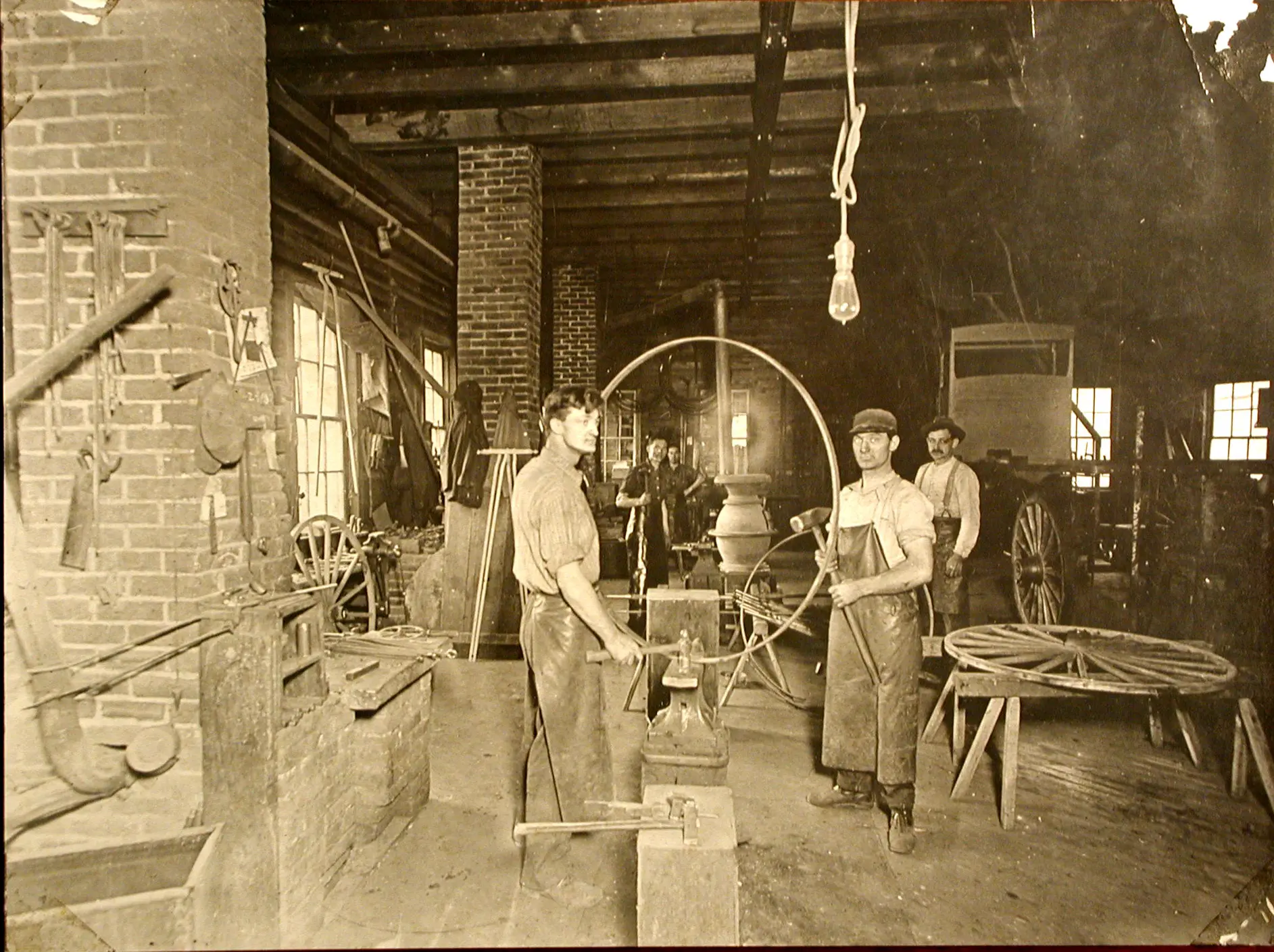
The story starts in 1872, when Jeremiah Sweinhart advertised the opening of his carriage factory in The Boyertown Democrat — building carriages, wagons, sleighs, and doing repair work. It was the beginning of Boyertown's vehicle-building industry. One of the earliest surviving pieces he built himself is a hand-drawn hose cart, made for Boyertown's own Friendship Hook & Ladder Fire Company — light enough to pull up and down hills without a horse, cutting real time off a fire response. In 1884, Sweinhart sold the business to Milton Strunk and Horace Fisher, who continued production as Strunk & Fisher; a three-story addition went up the following year just to keep pace with orders. Frank Hartman became a defining figure of this era too — building vehicles under his own name and appearing in the company's own craftsman photographs — as the business continued under several names, including Boyertown Carriage Works, all the way to 1926. Boyertown's first electrician, a young man named J. William Shaeffer, wired the carriage works for electricity in the early 1900s. Decades later, his daughter Erminie would marry into the family that carried the business into its next chapter — proof that the ties between Boyertown's founding families run as deep as the
buildings themselves.
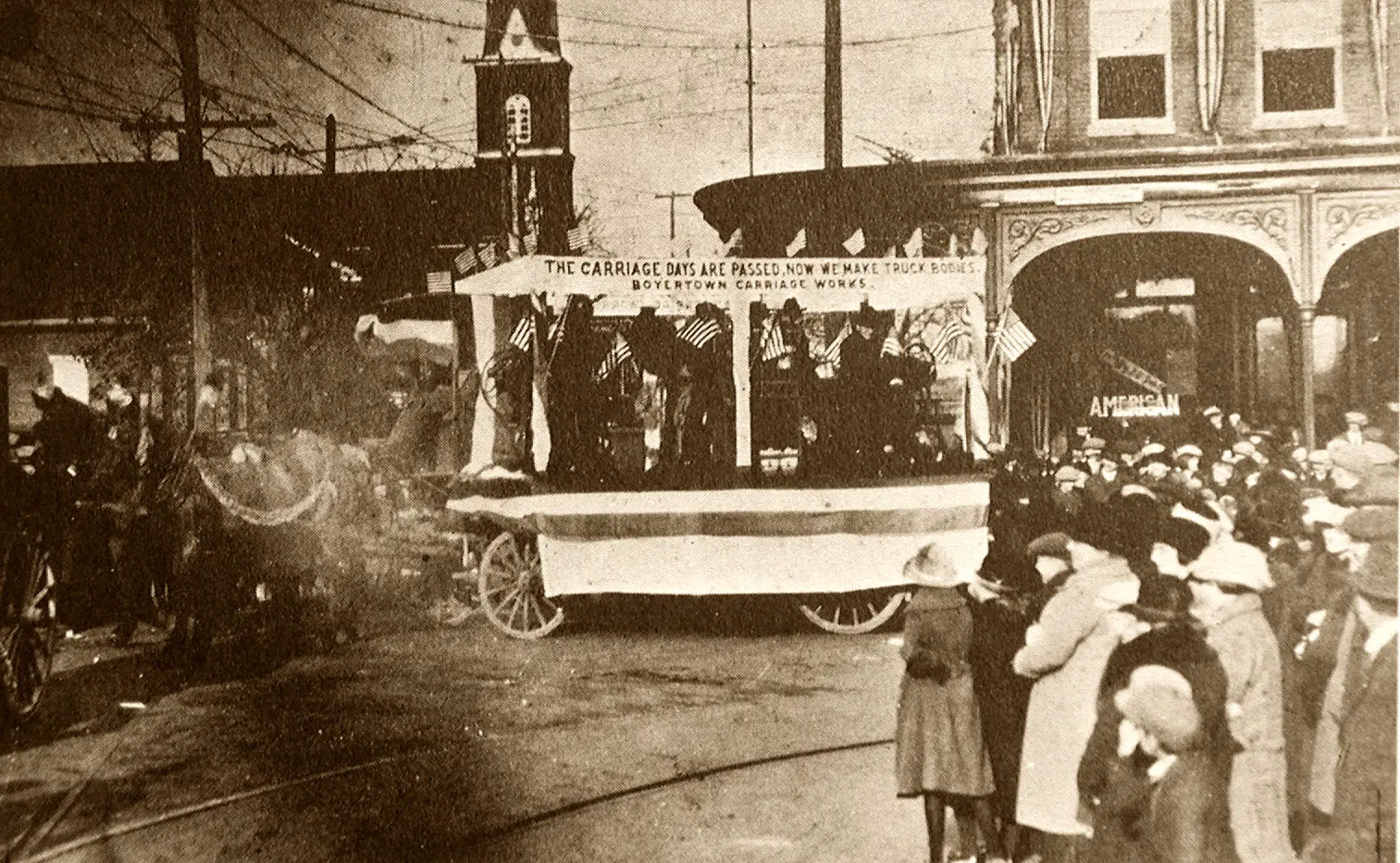
On March 1, 1926, a Reading-based group of investors led by B. Frank Hafer bought a controlling interest in the company and renamed it the Boyertown Auto Body Works. The shift away from carriages wasn't really Hafer's alone to make, though — a 1918 company parade banner, years before his purchase, already read: "The carriage days are passed, now we make truck bodies." Hafer's group inherited a company already mid-transformation, then built the next six decades on top of it. B. Frank's teenage son, Paul, started working there part-time that same year — the start of a 57-year career. He'd go on to lead the company as president for over four decades, and later serve 21 years as Chairman of the Museum's own Executive Committee.
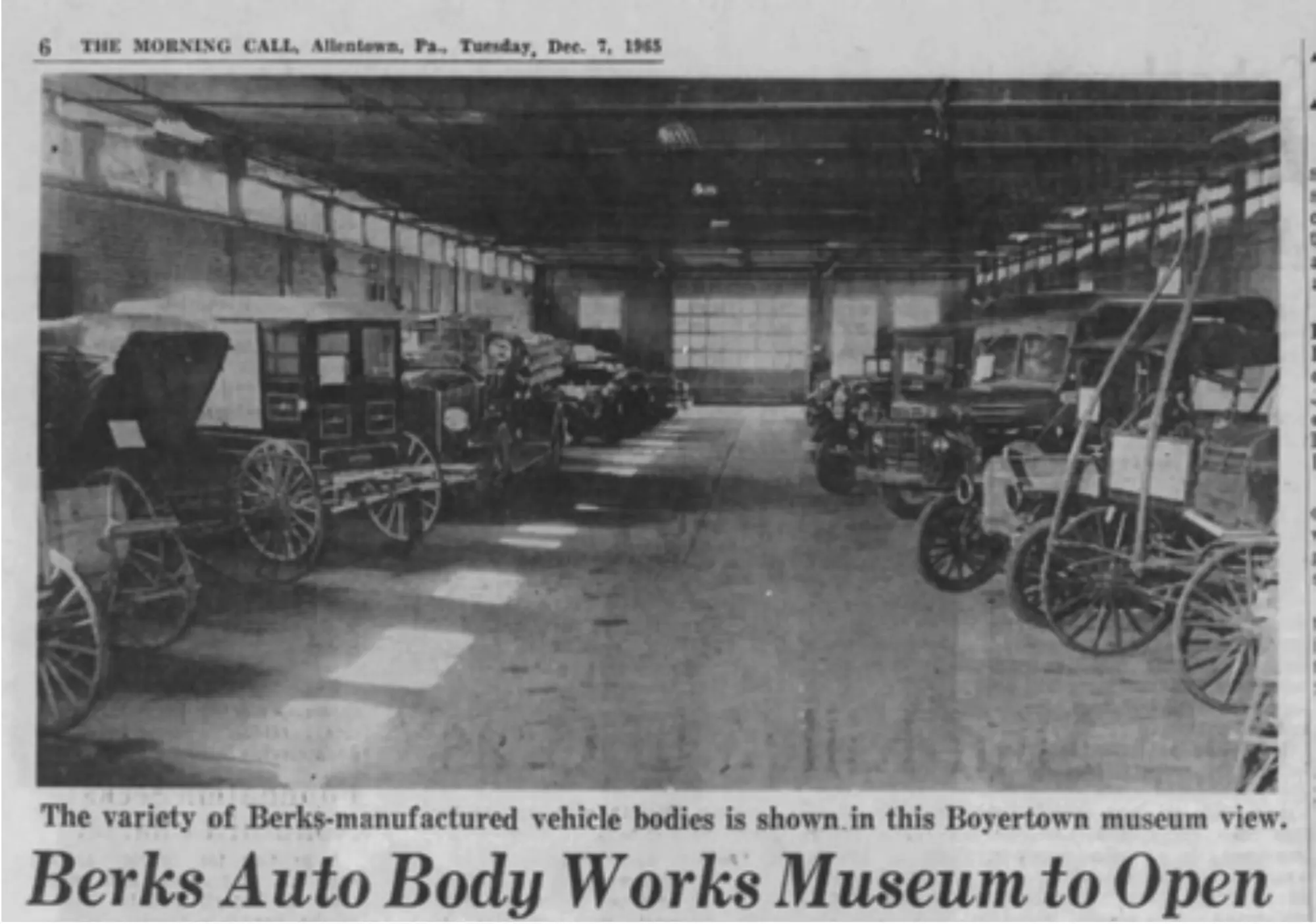
In 1965, with the Body Works at the height of its production, Paul and Erminie Hafer set aside one of the company’s buildings to begin something new: a collection honoring the region's transportation history. Erminie later wrote the definitive account of that history herself — a book called A Century of Vehicle Craftsmanship, almost certainly where this very page's title comes from. Three years after the collection opened, the Hafer Foundation was established to carry it forward under the name it carries today.
The Museum has brought back to life the paint shop building of the Boyertown Auto Body Works. It’s becoming Gallery 2--meaning the collection is about to expand again into a historic building from its past.
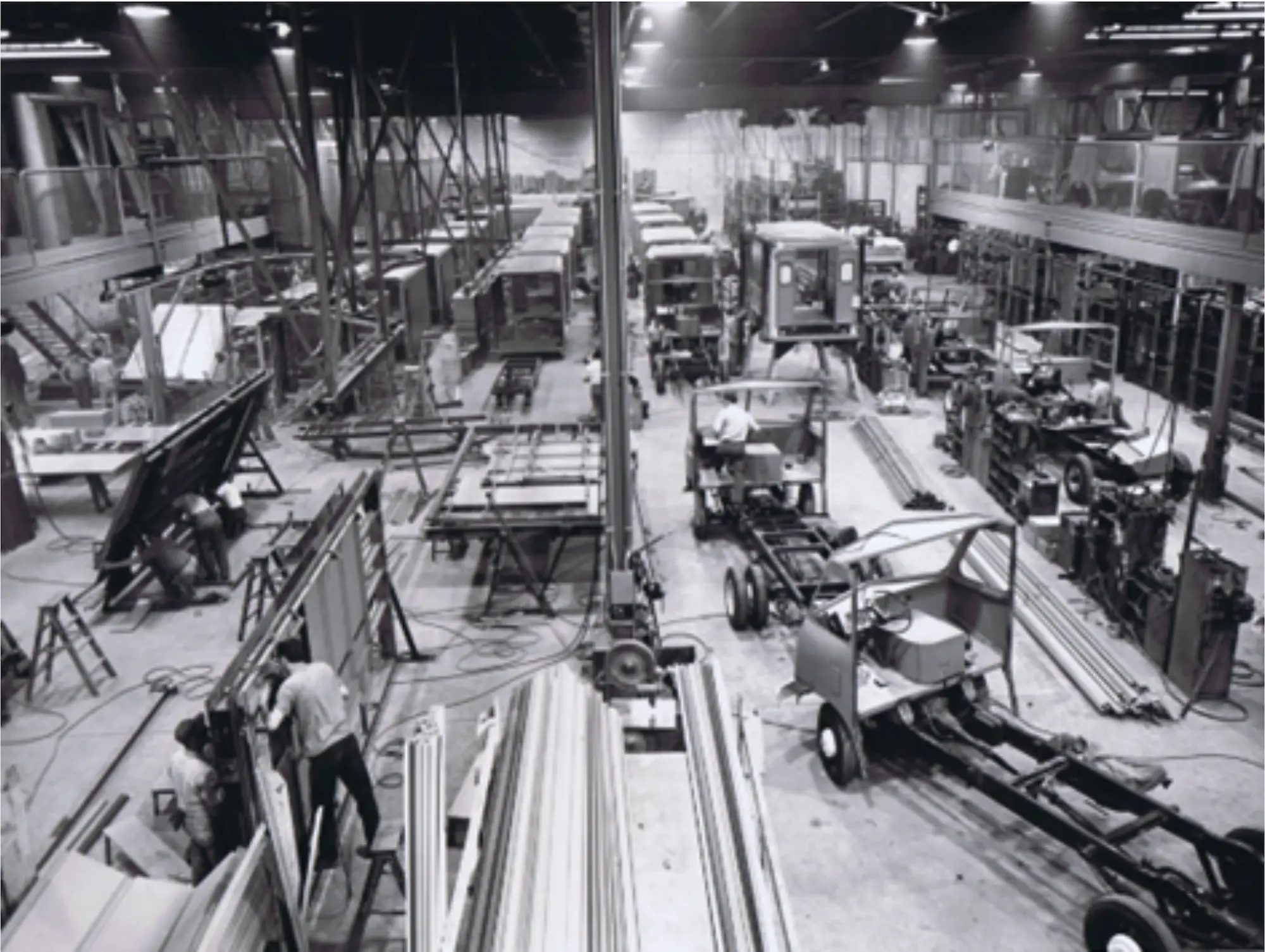
The factory setting wasn't recreated for the Museum. It's real. Even the Jeremiah Sweinhart Carriage Factory, tracing back to that original 1872 carriage-building tradition and still home to our working forge and blacksmith demonstrations today, predates the automobile itself — proof that Pennsylvania was building the vehicles of American life long before the first engine ever turned over here.
Some of what you'll see was built right here, inside these walls, when this was still an active body works. But the story doesn't stop at our front door. Every vehicle in our collection has Pennsylvania roots — built, assembled, or sourced somewhere within the Commonwealth, from small machine shops in the Delaware Valley to the factory floors that once anchored towns like this one.
And once they left here, they didn't stay put. Between 1959 and the 1960s, the Body Works built 800 mobile ice cream trucks for a pair of Philadelphia brothers named Conway — the founders of Mister Softee. And the Tour Wagon name covered more ground than most model lines ever do. In 1951, a custom-built Tour Wagon left Boyertown for Prince Makonnen, son of Ethiopian Emperor Haile Selassie. By 1949, that same name was already on a line of camper Tour Wagons — built years before recreational camping became a national pastime in the late 1950s and '60s. One of them, a 1966 model nicknamed the Sundowner, carried the Chapin family across the country on road trips their son later turned into a memory book, still on
display with the vehicle today.
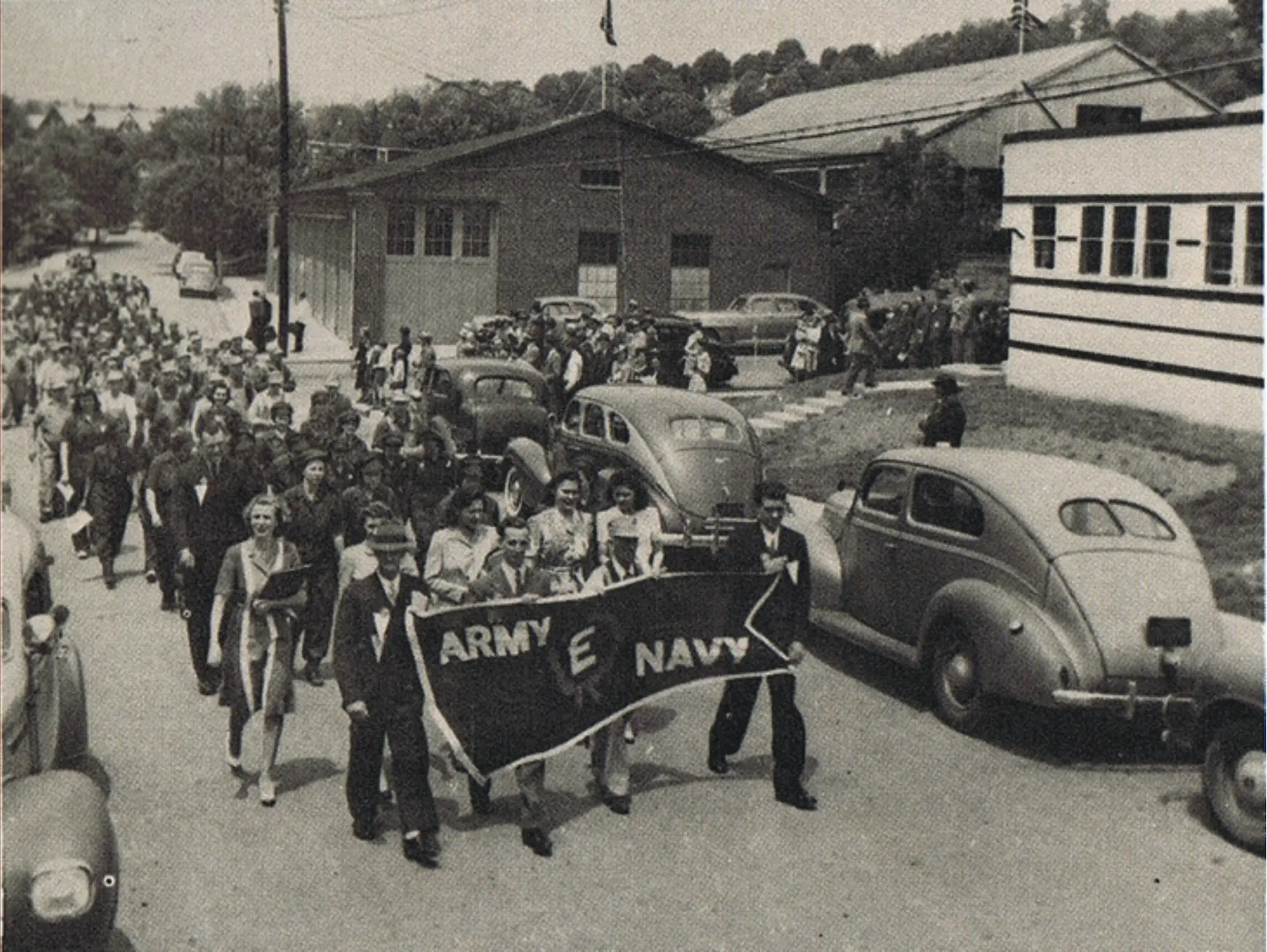
The reinvention didn't stop there. A photograph in the Museum's own archives shows an employee, Linwood Sands, dressed as "Reddy Kilowatt" — the mascot of a national electric utility advertising campaign — standing beside a Battronic electric truck, built right here for utility companies. Boyertown was building electric delivery vehicles decades before "electric vehicle" entered everyday vocabulary. And during World War II, the Body Works built 900 ambulance bodies for the war effort — plus mobile field units ranging from prosthetic laboratories to hospital operating rooms — work recognized with the Army-Navy "E" Award for Excellence in War Production, and four additional stars for sustained performance after that.
Carriages. Truck bodies. Ambulances. Ice cream trucks. Campers. Electric vehicles. This isn't a museum of cars that happened to pass through Pennsylvania. It's a museum of a company that kept reinventing itself — and everywhere those vehicles went from here.
Built Here. Driven Everywhere.
Come See Us
This museum runs on the belief that history is worth protecting — not just for collectors, but for the next generation of Pennsylvanians who deserve to know where they came from. Your membership makes that possible.