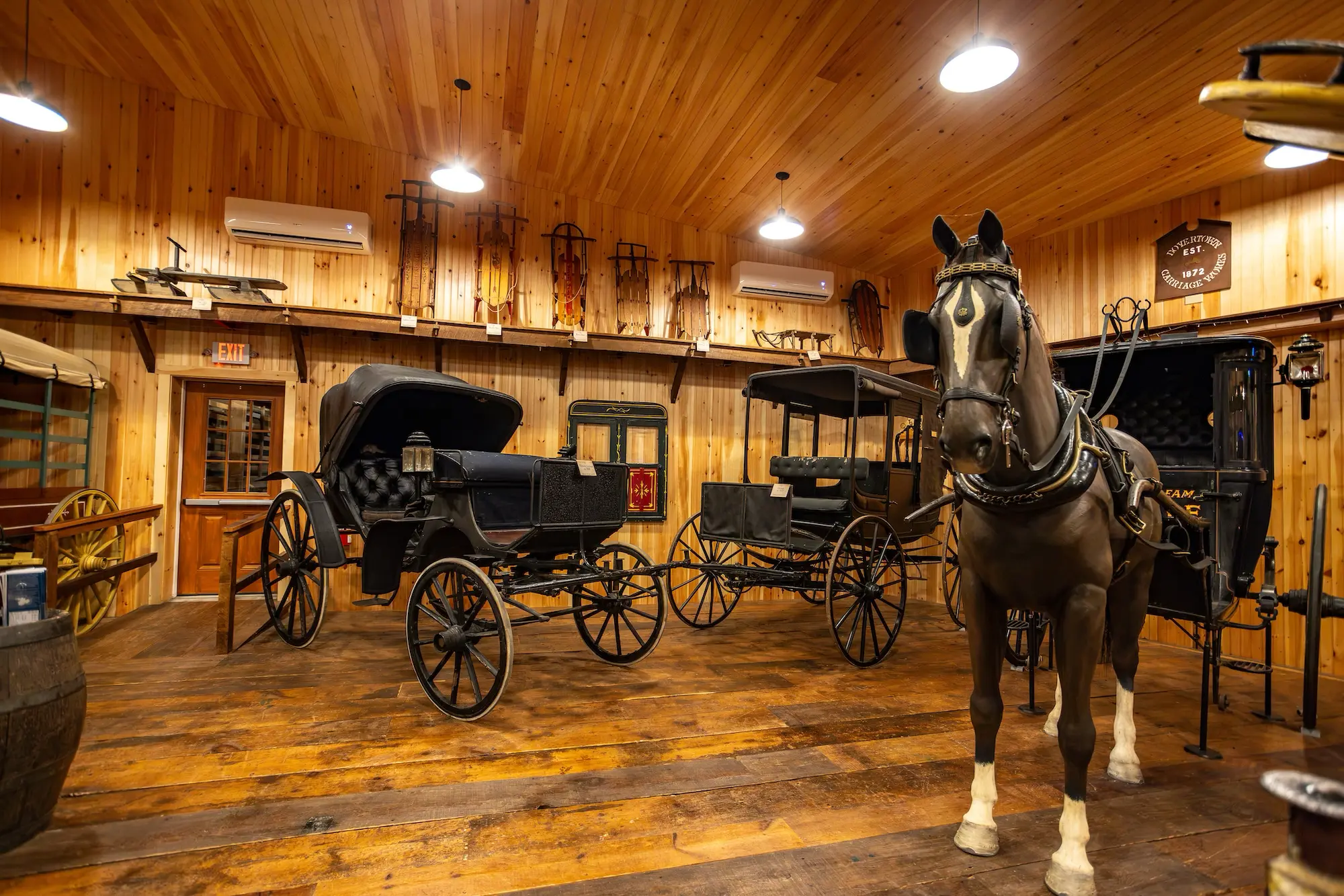
A King’s Coach and a Cab From London.
A recent addition to the Museum’s gallery space — but the carriages inside have been traveling for well over a century.
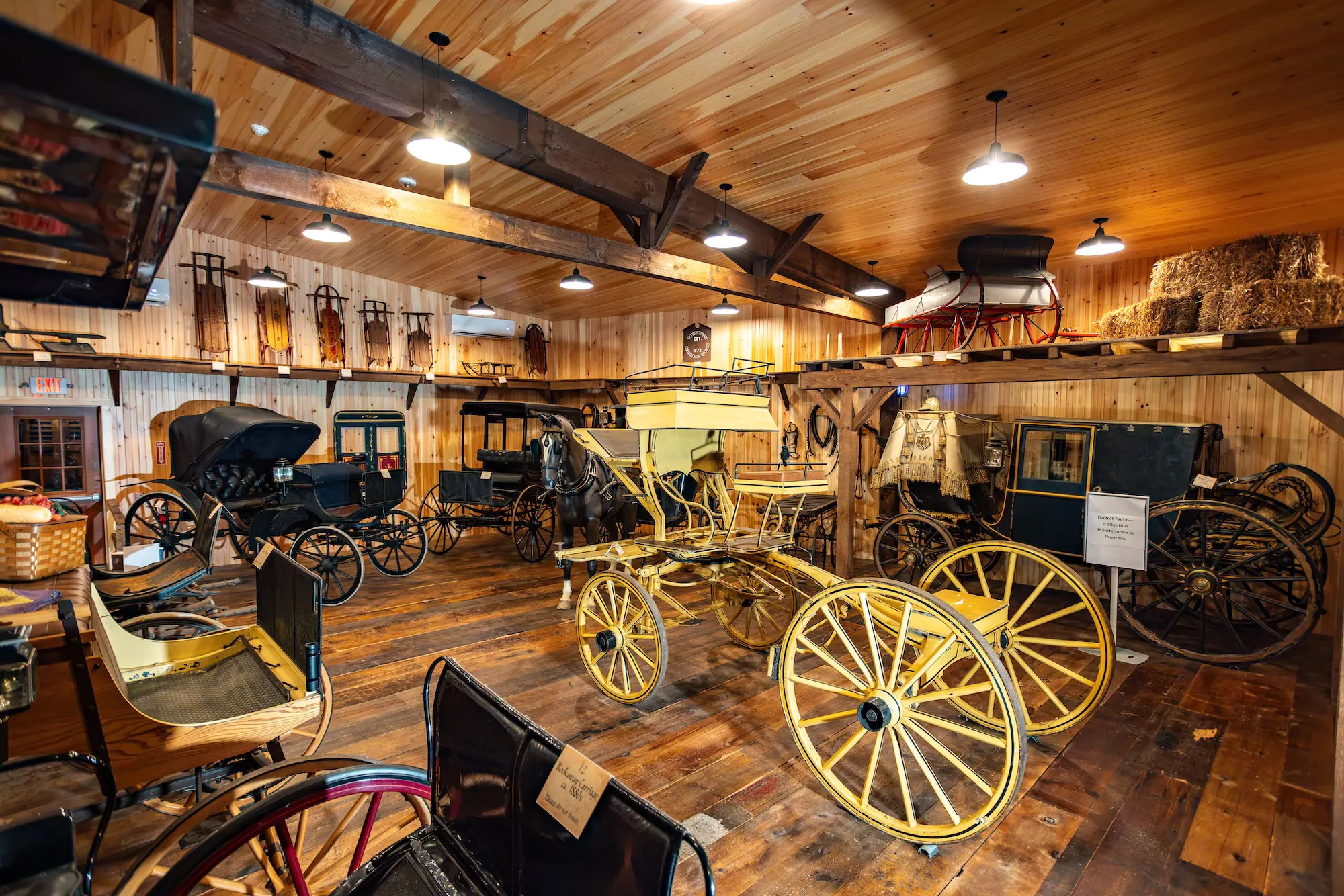
Not Every Carriage Was Built to Haul Freight
Carriages weren't one thing — they were a whole spectrum, from working vehicles to rolling status symbols. Some trained horses. Some carried the dead with dignity. And some were built for kings.
Four Carriages Worth Knowing
The Skeleton Break (yellow, center of the room) — used to train horses and drivers. A rear box held lead weight to simulate the load of a real carriage, so both horse and driver learned under realistic conditions.
The Hansom Cab — became London's most popular cab starting in 1836. The driver sat elevated behind the closed cab, up to two passengers entered through a front folding door, and the driver communicated with them through a trapdoor in the roof. Later introduced to American cities including Boston and New York.
The Bavarian State Coach — a formal dress coach built for King Ludwig I of Bavaria, who began his reign in 1825. Later used by his son, Prince Albert, and marked with the marshaled arms of Bavaria and Spain — evidence it was prepared for Prince Albert's Royal Household in Munich for his wedding to the Spanish Infanta Amalia Felipe. It later crossed the Atlantic, brought to the United States by Hans Holterbosch, an importer of Löwenbräu beer.
The Two-Horse Hearse (built 1870) — hearses were traditionally called "funeral coaches"; the word "hearse" itself dates to 17th-century horse-drawn funeral carriages. Today's largest hearse manufacturer in the U.S., Accubuilt of Lima, Ohio, still carries that tradition forward.
Pamphlets with more detail on each carriage are available in the room.
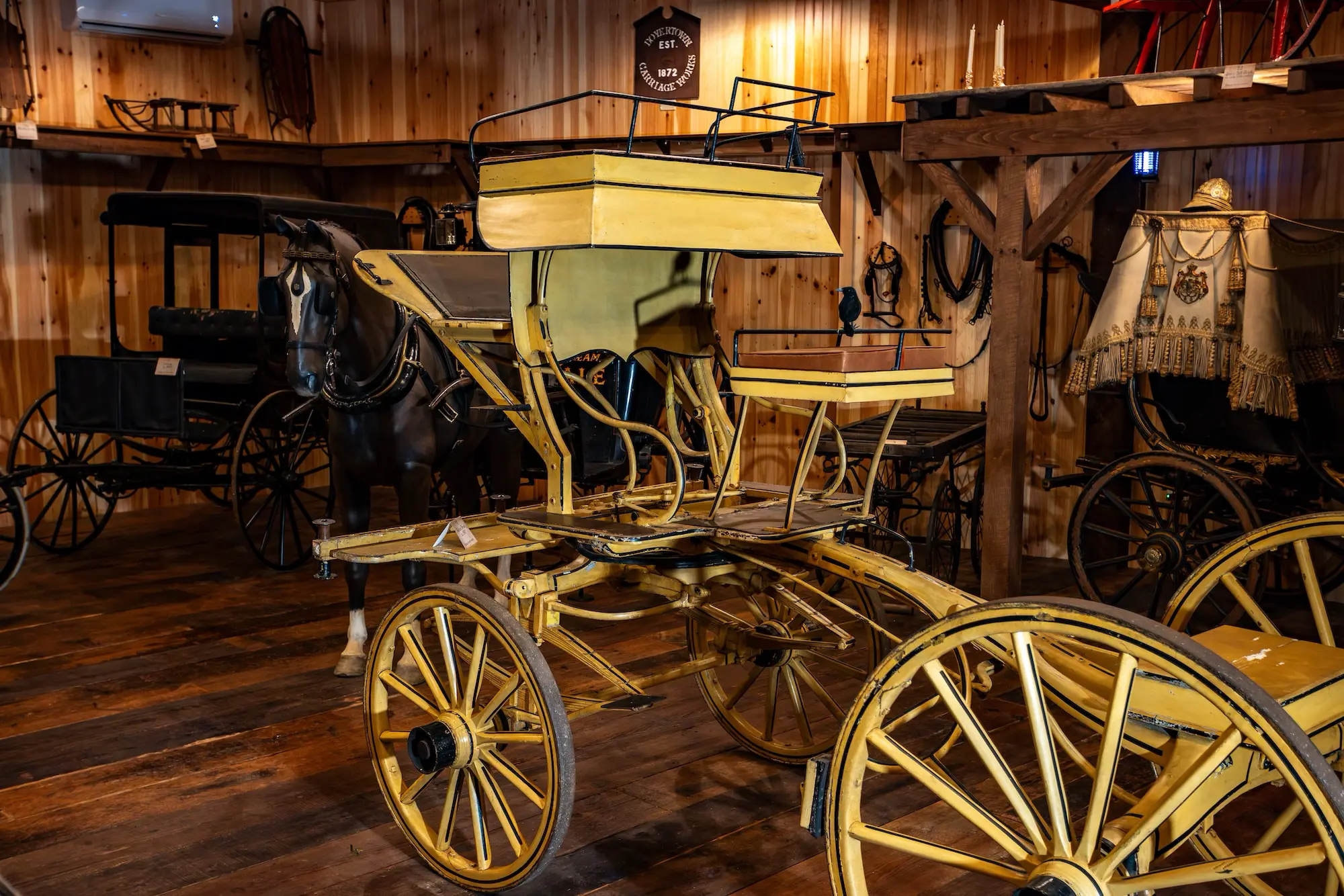
The Skeleton Break
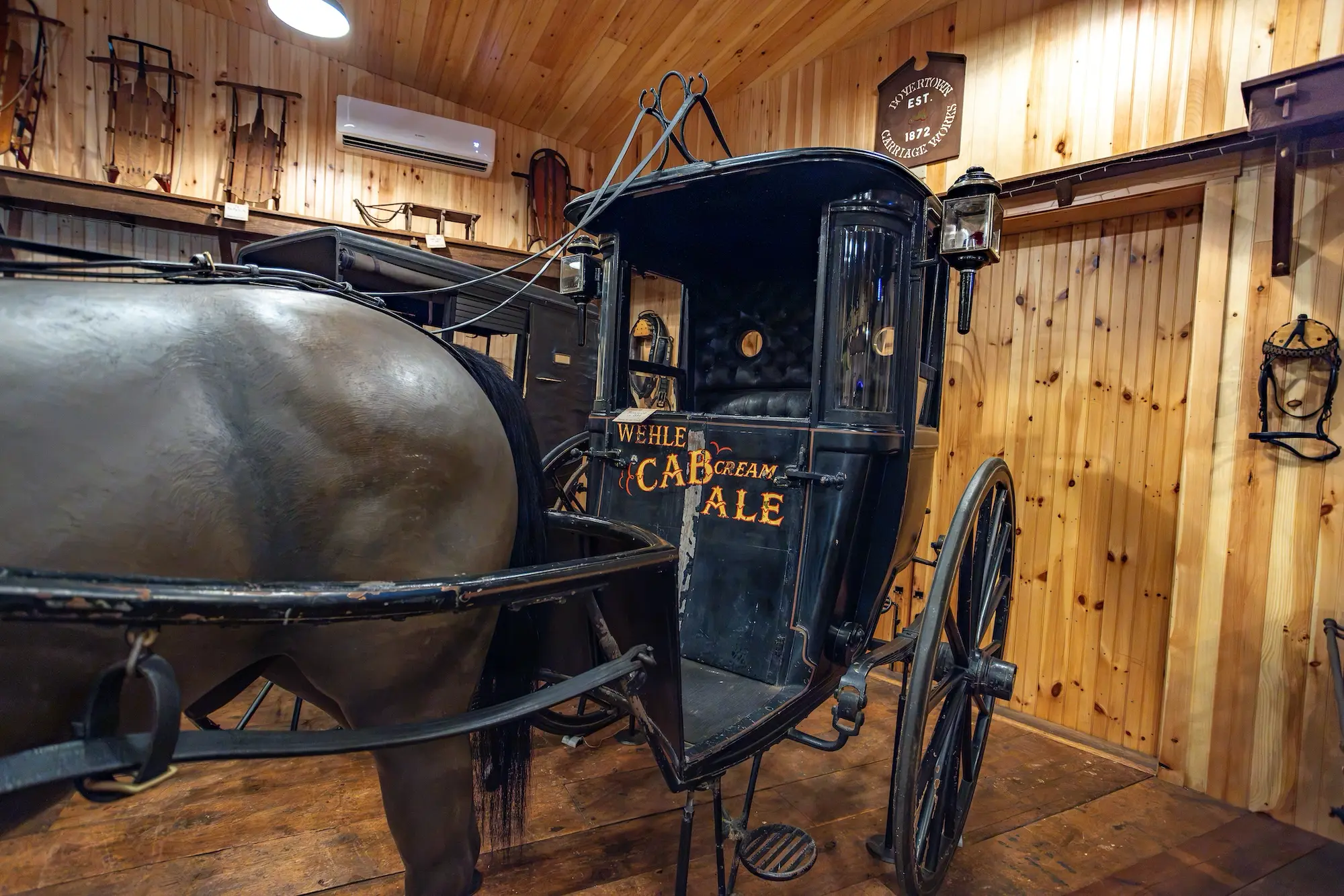
The Hansom Cab
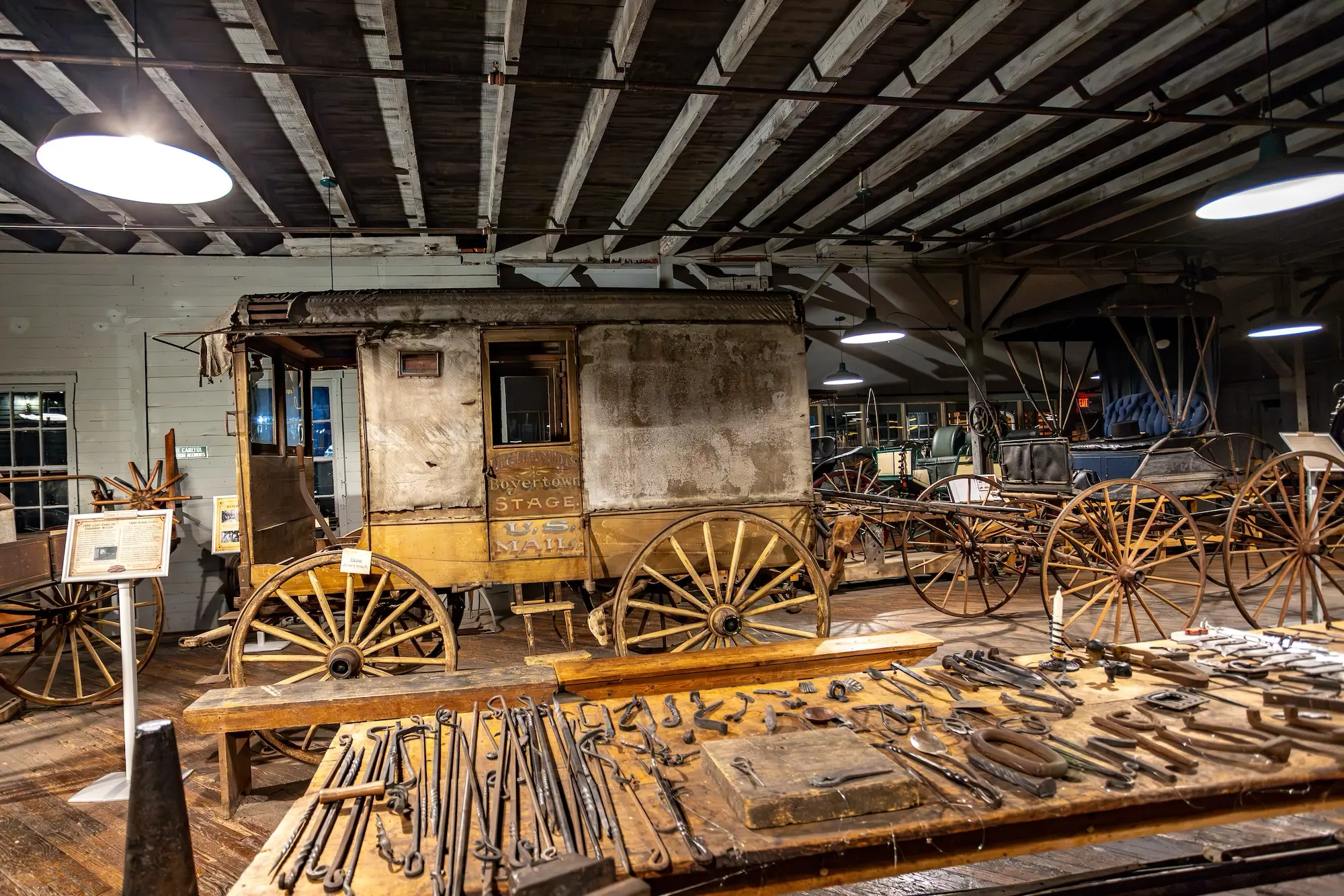
The Bavarian State Coach