This Isn’t a Recreation. It’s Still Working.
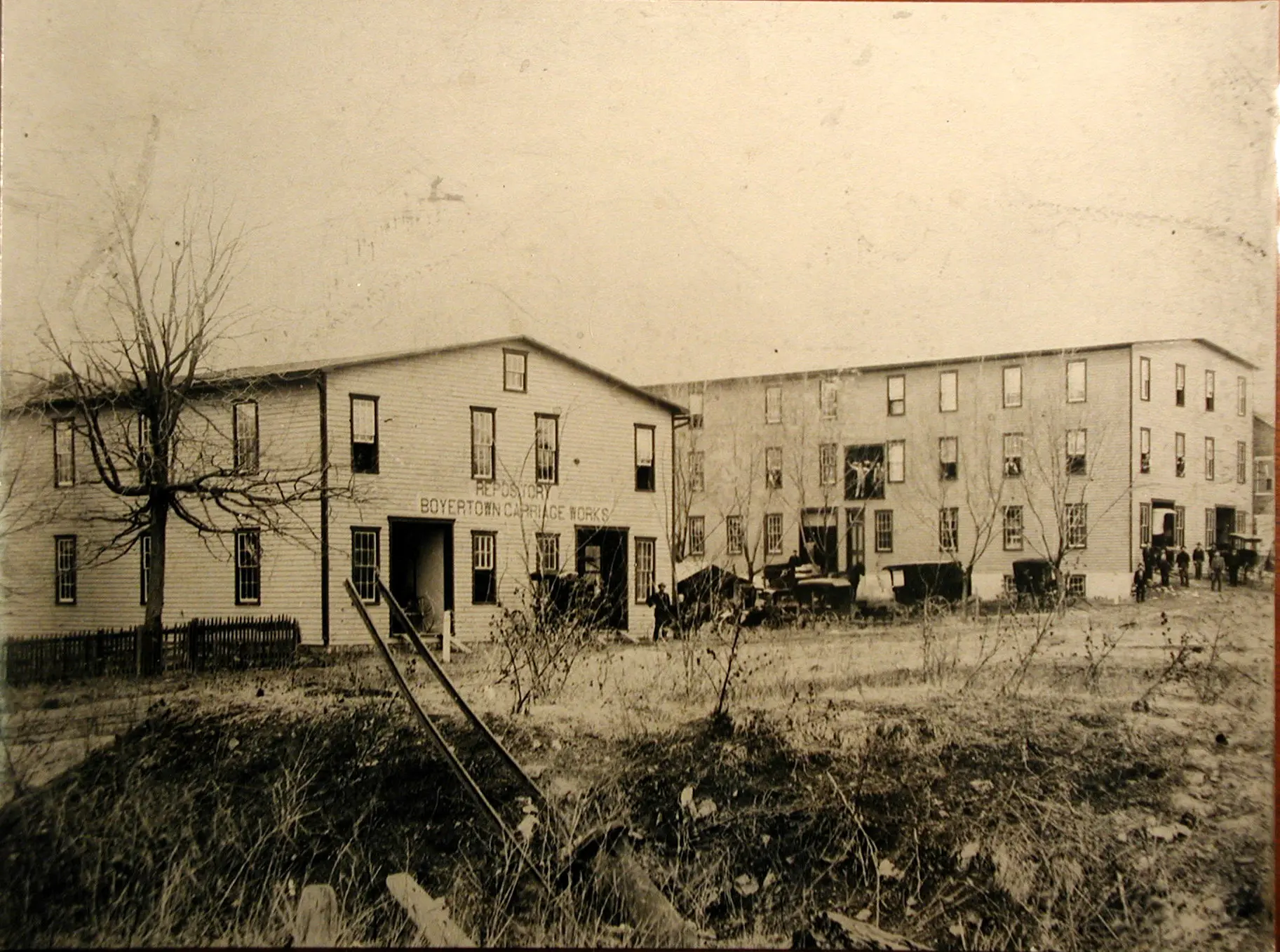
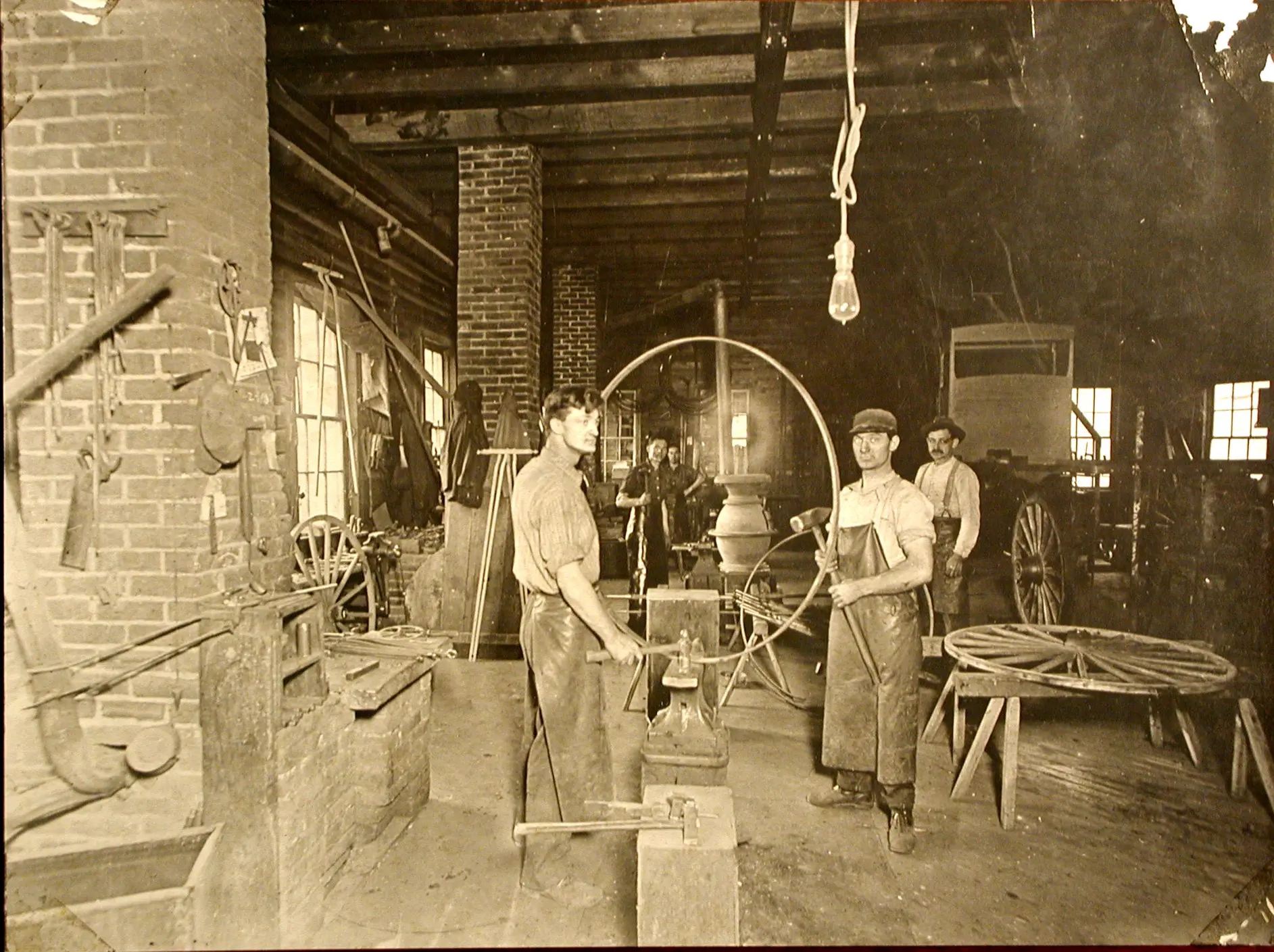
The forge you’ll see here isn’t a museum prop — it’s the real thing, still fired up by a real blacksmith, inside the building where vehicle-building in Boyertown actually began.
Before the Factory Floor, There Was the Forge
Long before assembly lines and stamped steel, every carriage started with a blacksmith — hand-forged ironwork for axles, wheel rims, springs, and fittings. Blacksmithing wasn't a sideline to the carriage trade; it was the trade, the skill every early vehicle-builder depended on. In 1810 alone, Pennsylvania reported 2,562 blacksmith shops doing over $1.5 million worth of work. As manufacturing industrialized, that hands-on craft mostly disappeared from the process. Here, it didn't.
The trade produced its share of famous names, too. Samuel Yellin arrived in Philadelphia in 1905 and, by 1909, had opened his own metalsmith shop — early commissions included the iron window grilles for the Federal Reserve Banks, and by the Great Depression he was one of the city's most celebrated blacksmiths. Further west, a blacksmith named William "Uncle Billy" Smith was hired in 1859 to help drill the world's first successful oil well near Titusville, Pennsylvania — using tools he'd made himself in his own shop.
What You’ll Find Inside
The Blacksmith Station
Fully functional, with demonstrations several times a month and examples of forged pieces on display.
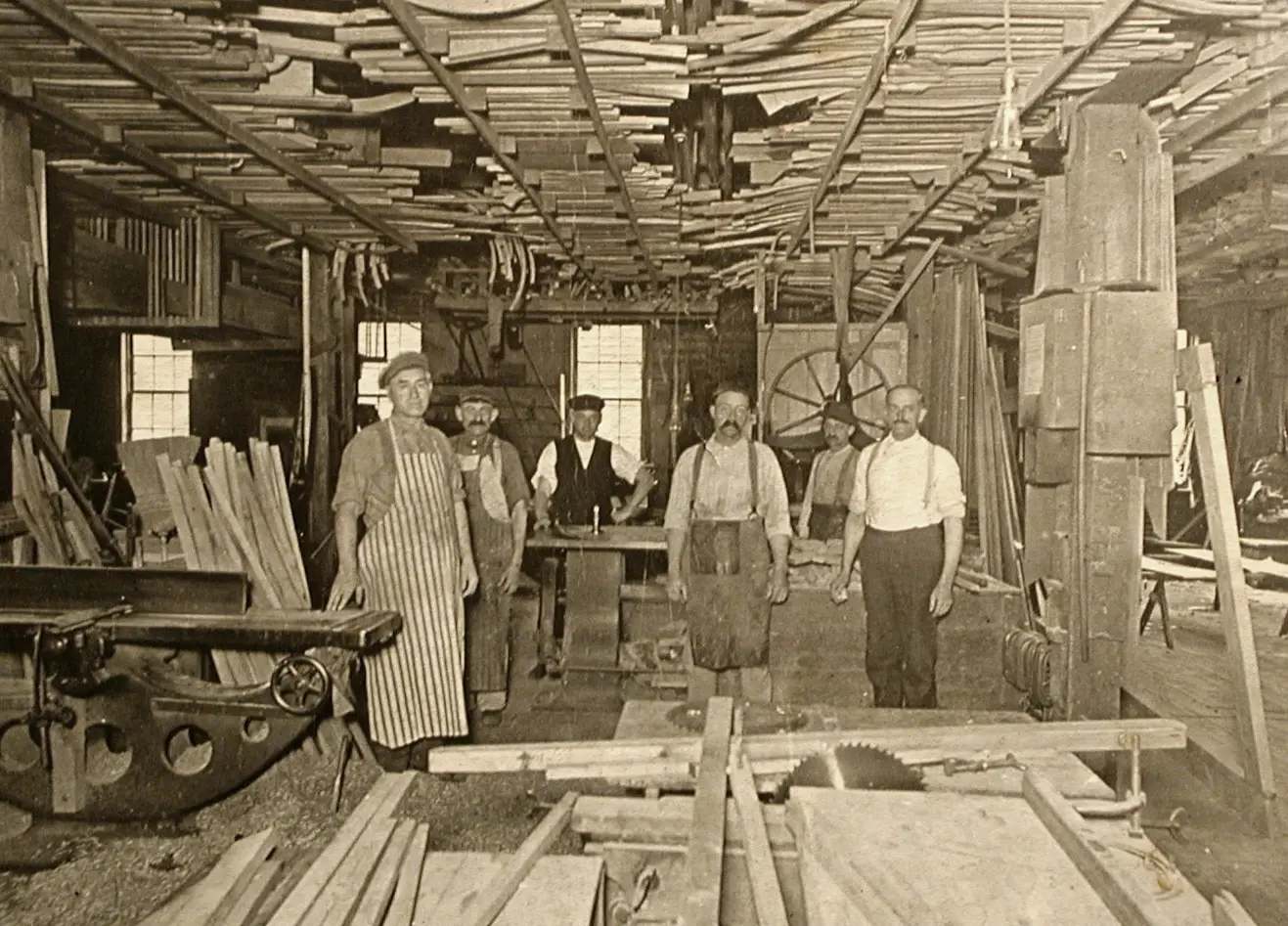
Tool Stations
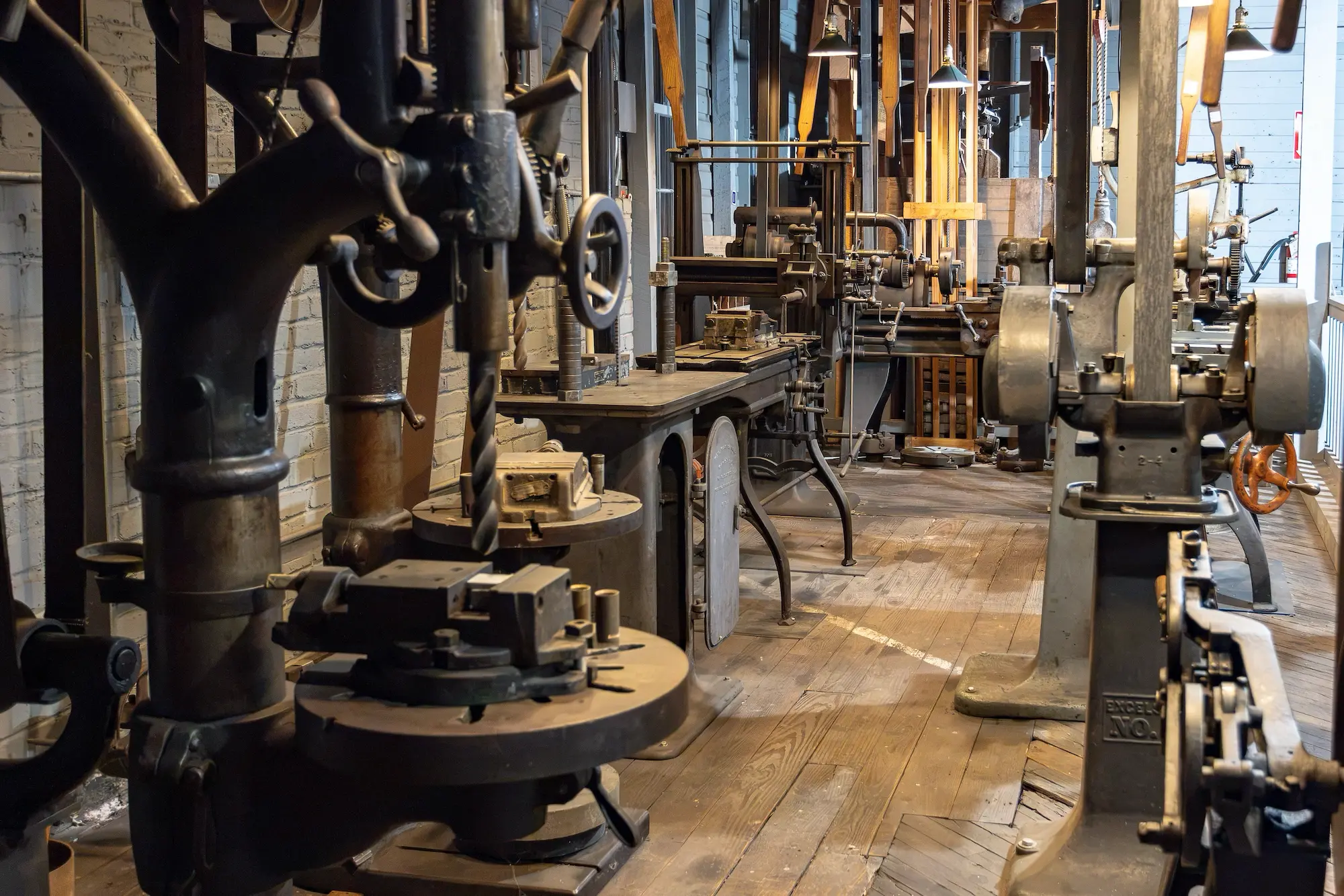
A sewing machine, drill presses, a lathe, grinding wheels, two types of saws, and a carriage wheel diagram on a blackboard in the back corner.
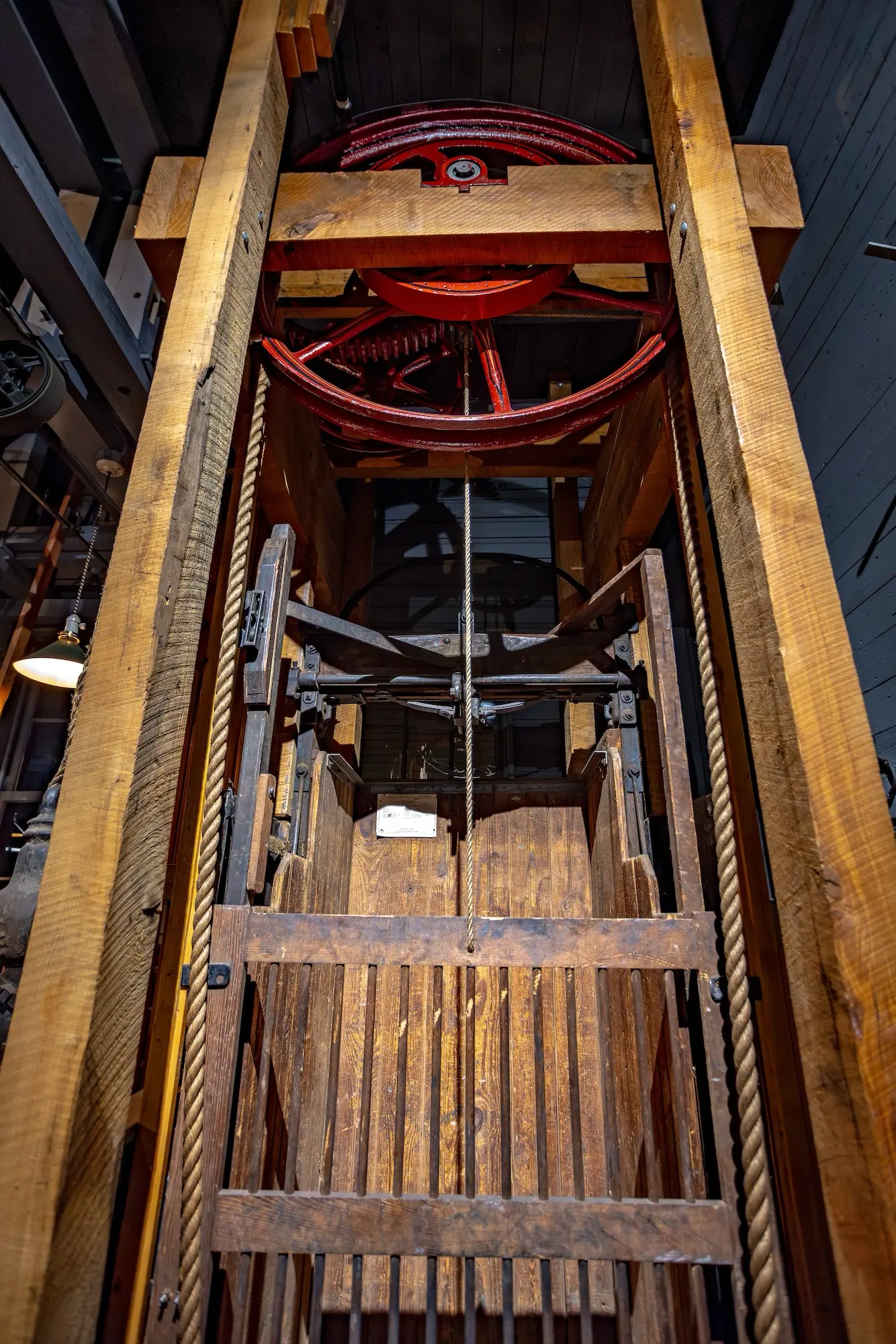
The Historic Elevator
Not original to the building, but donated to the Museum. Pulley-operated, used to move goods between floors, and it still carries a certificate of safety believed to have been valid until 1990.
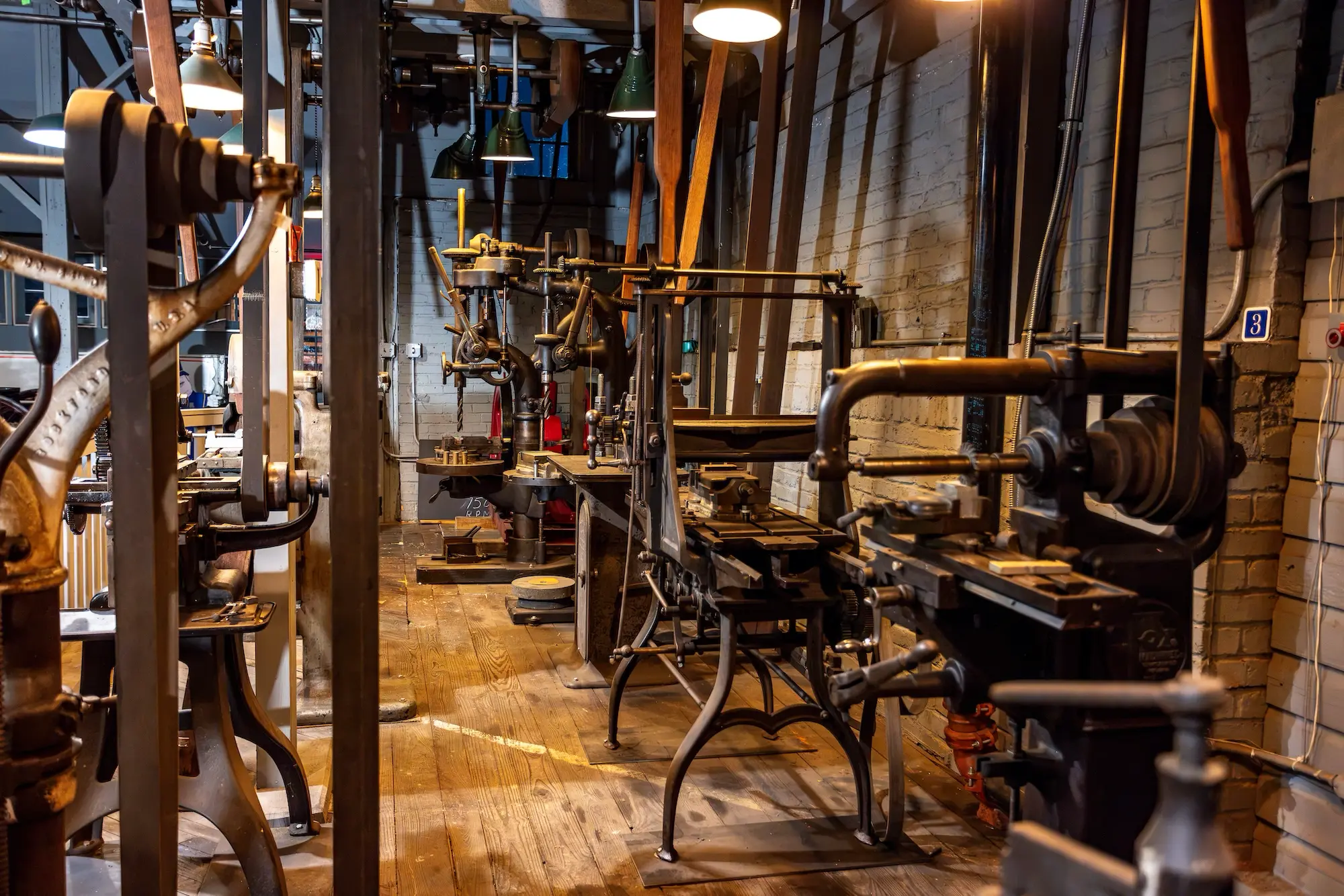
The Machine Shop
Also not original to this building. It was donated by Sterling Walsh; Museum staff traveled to Maryland to disassemble and transport it here, and the upper pulley system was reconstructed by contractors on-site. The headline piece is a One-Lunger (Hit & Miss) Engine — a single-cylinder gasoline engine that drove the shop's belts — alongside manual, pedal-operated machines: a drill, a jig saw, a grinding wheel, a lathe, a sewing machine, and a belt-stitching table showing how drive belts were repaired. Sterling Walsh passed away before he ever got to see the machinery installed in its new home — worth a quiet mention, not a footnote.
Five Vehicles Worth Slowing Down For
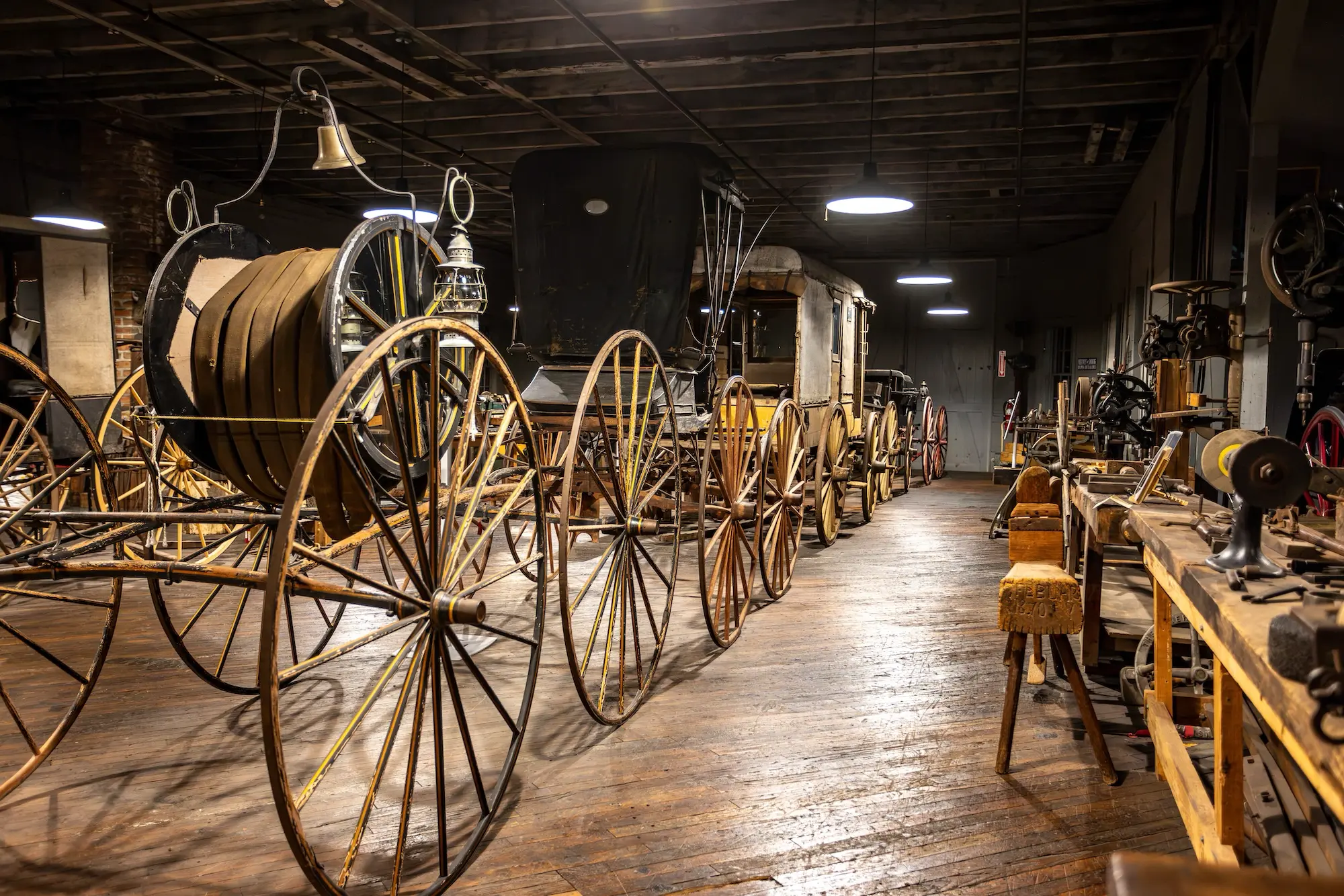
Every piece on this floor has its own placard. Here’s what a few of them say.
1872 Doctor’s Buggy
Built during Sweinhart's very first month in business. High wheels for rough roads, a sealed under-seat trunk to keep medicines dry, and a roll-up canvas back panel for warm-weather ventilation. Donated by Paul and Erminie Hafer.
1875 Hose Cart
One of the earliest surviving Sweinhart-made vehicles, built for Boyertown's Friendship Hook & Ladder Fire Company. Hand-drawn rather than horse-drawn, which meant no time lost hitching a team before responding to a fire. On loan from the Friendship Hook and Ladder Company.
1890 Stage Coach
Ran daily between Boyertown and Reading, carrying mail, passengers, and packages, changing horses along the way at the Yellow House livery stables. Look for the deep gouges in the wood body, worn in by the iron-tired wheels on sharp turns. Gifted by Willard Reitnauer.
1900 Sleigh
Built by Frank Hartman, successor to Jeremiah Sweinhart himself. Restored before World War II by former Boyertown Carriage Works craftsmen, including a blacksmith named Willet Geschwind — yes, that Willet. The Museum's own bear mascot takes his name from him.
1910 Pleasure Trap
Built by carriage builder Frank Hartman for his own personal use. Later retrofitted with hydraulic brakes designed by Paul Hafer, meant for a small mare named Nellie who couldn't hold the loaded wagon on a hill alone. Per the Museum's own placard, "this addition would later be a source of regret for Paul and Erminie Hafer."
There's more where these came from — a racing sulky, a working farm wagon, a mill sleigh with a real ice-harvesting saw still inside it, and a surrey built for turn-of-the-century Sunday drives. Come see the rest in person.
Keep Walking — There’s More
Straight through the factory floor, the Carriage Barn holds even more carriages and sleighs — including a formal coach built for a Bavarian king.
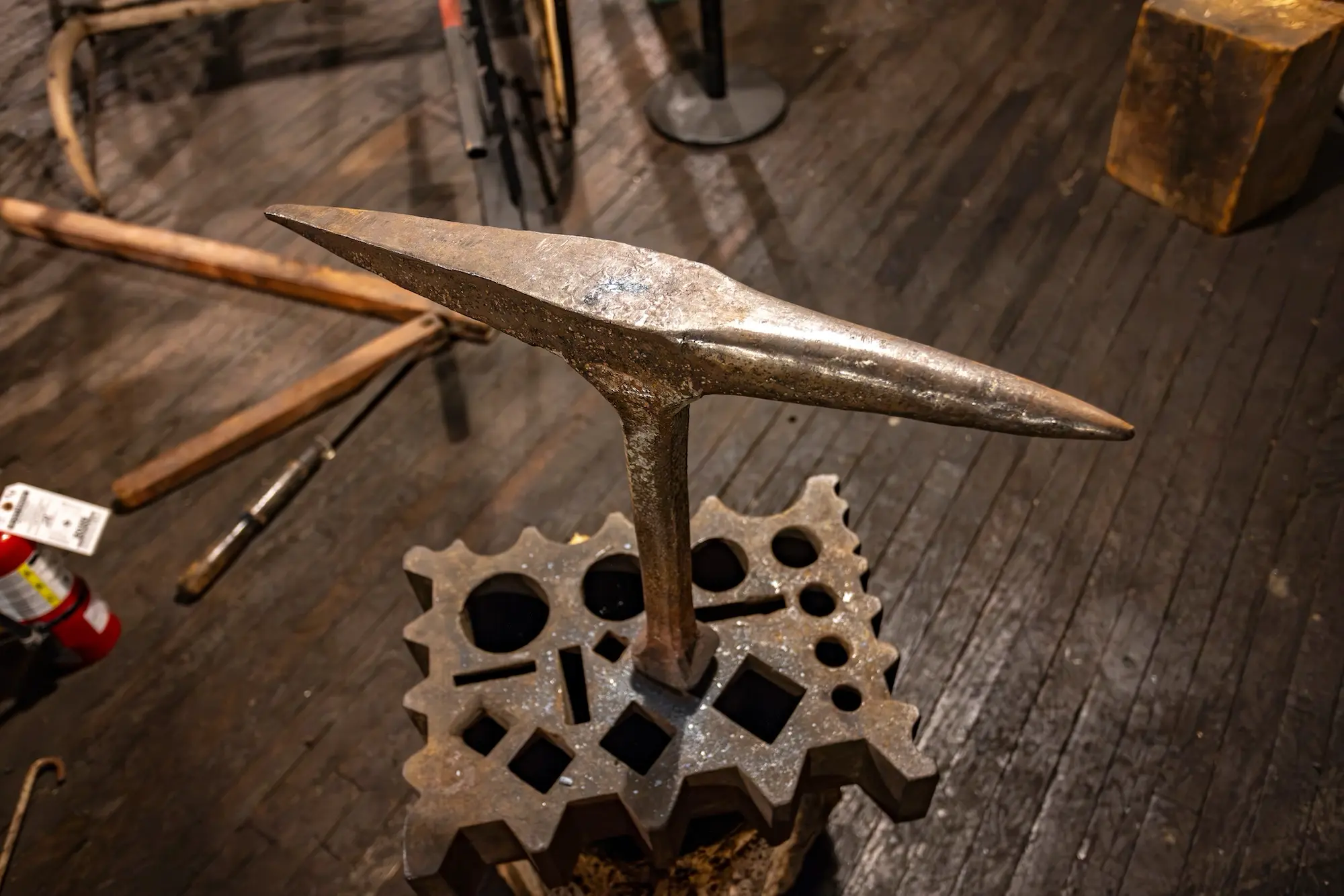
The forge in use
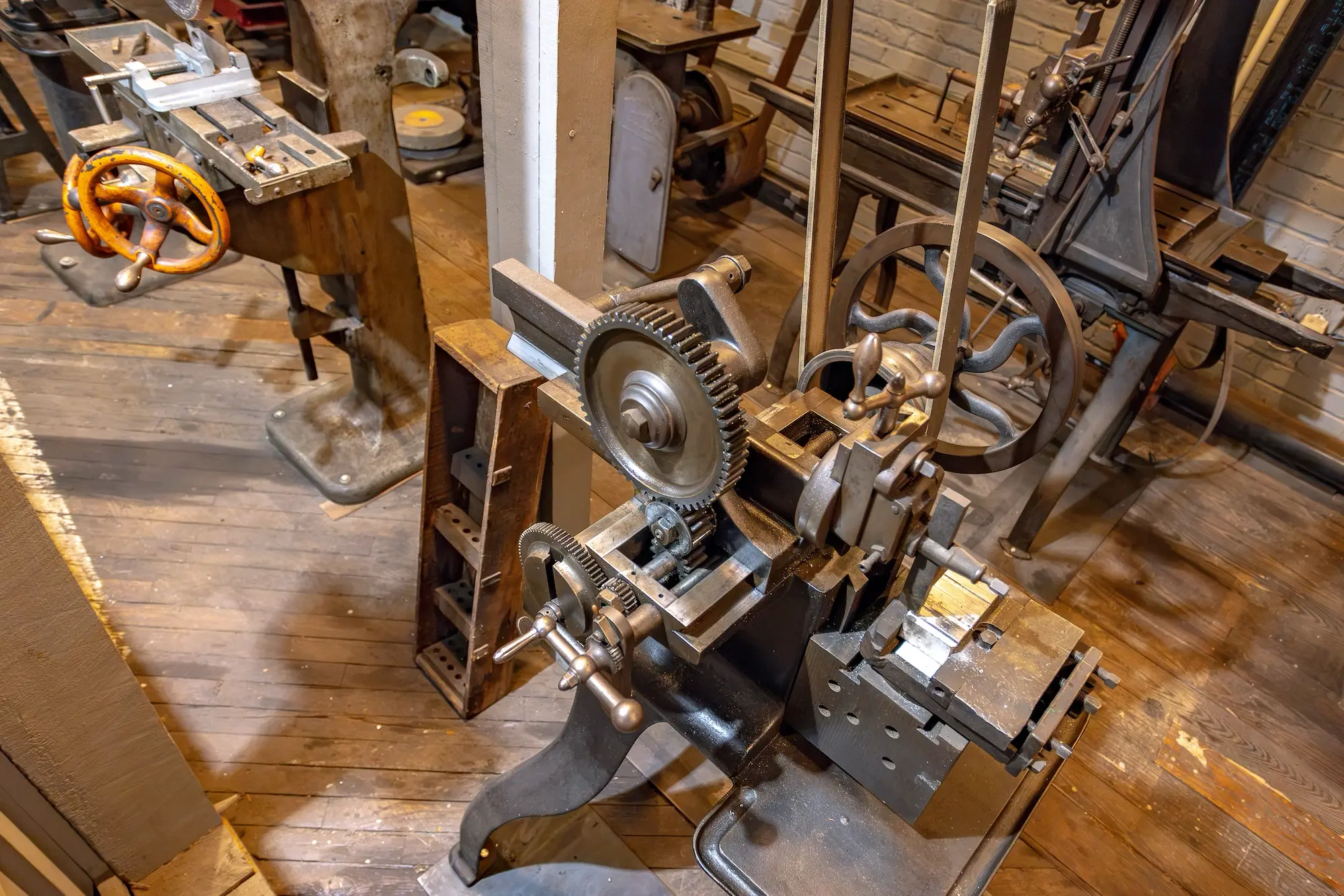
The One-Lunger engine
The historic elevator